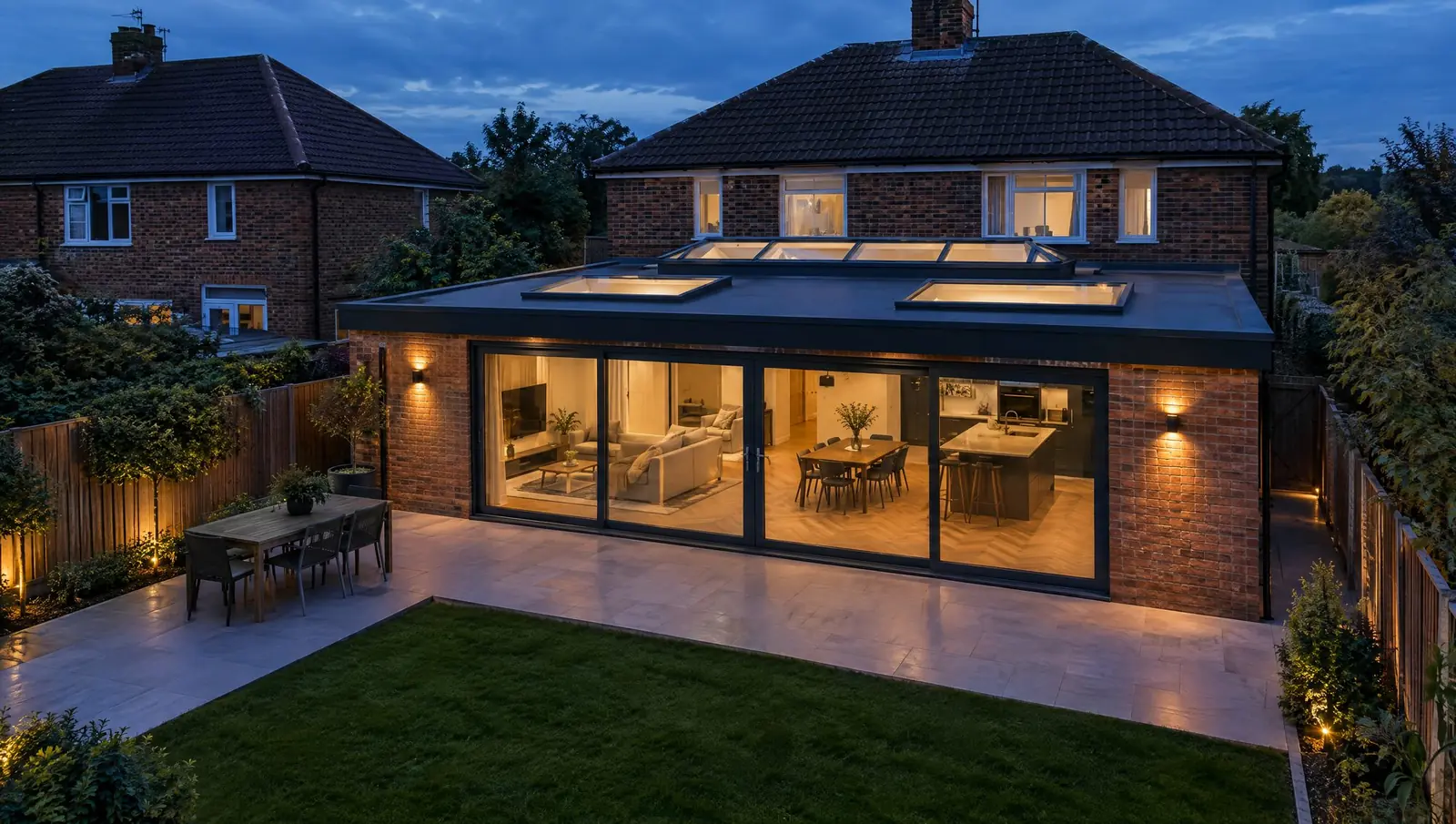
Skylights and rooflights across Dorset
Skylights, roof lanterns and roof windows fitted throughout Dorset, from Bournemouth to Weymouth, after a survey and a fixed written quote.
Western coasts take wind-driven rain, so we pay close attention to upstand height and flashing laps on exposed roofs.
Stone cottages, slate roofs and conservation areas are common in the South West, and conservation-profile rooflights keep the roofline quiet.
Towns in Dorset
Products and services in Dorset
Planning and building rules in England
English householder permitted development (Class C) normally covers rooflights that stand no more than 0.15 m proud of the roof plane and stay below the highest part of the roof. A rooflight on a side-facing slope must be obscure-glazed, and fixed shut unless the opening part is more than 1.7 m above the floor.
Under Approved Document L, a rooflight added to an English home must achieve at least 2.2 W/m²K (horizontal plane), and a roof window 1.4 W/m²K or Window Energy Rating Band B. Replacing a rooflight or roof window can be self-certified by an installer registered with an authorised competent person scheme; otherwise building control approval is needed.
Neighbouring areas
Common questions
Do you cover all of Dorset?
Yes. We survey and fit across Dorset, including Bournemouth, Poole and Weymouth. Remote and island addresses are by arrangement.
Do I need planning permission for a rooflight in Dorset?
In England a rooflight on a house is usually permitted development under Class C if it projects no more than 150 mm beyond the roof slope and sits no higher than the ridge.
Are you accredited?
We do not display trade-body logos unless a membership is held and current. Product certifications belong to the manufacturers and we provide their documents.
How do I get a price?
Use the guide-price tool for an instant range, or send the form with your postcode and a photo for a fixed quote after survey.
Do I need building regulations approval?
New openings and extensions go through building control. In England and Wales, replacements can often be self-certified through a competent person scheme; Scotland and Northern Ireland have their own routes. We tell you which applies.