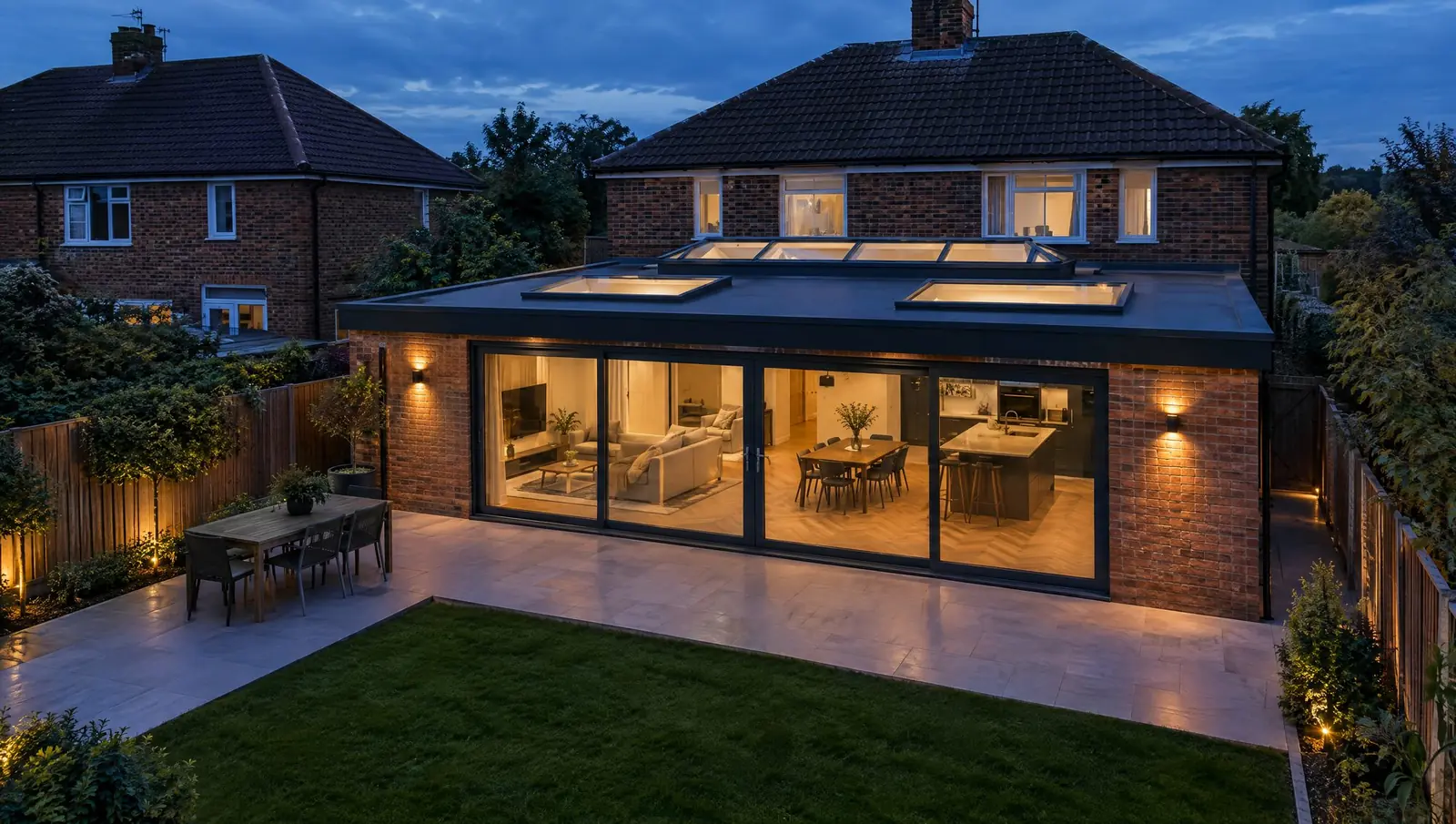
What are rooflight upstands & kerbs?
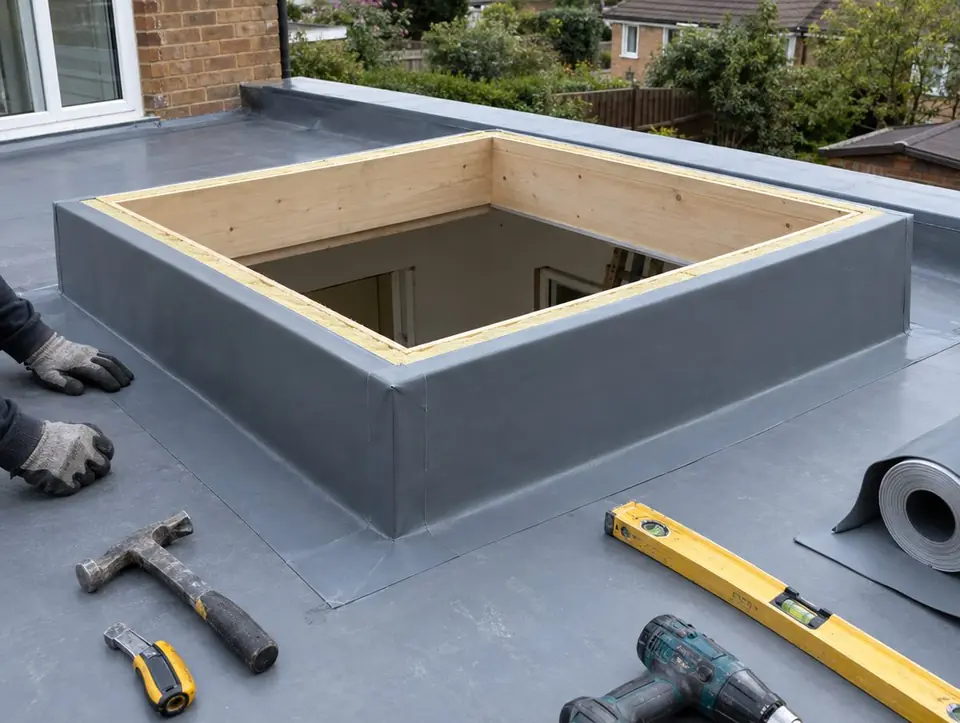
A rooflight upstand, or kerb, is the raised frame on a flat roof that the rooflight sits on. It lifts the glass above the roof surface, gives the membrane something to turn up against, and carries insulation so the opening does not become a cold spot.
Most leaks blamed on rooflights are really upstand problems — too low, uninsulated, or with the membrane badly dressed. Getting the upstand right is the single most important part of a flat rooflight install.
We build timber or use insulated proprietary kerbs, set them square and to the manufacturer's dimensions, and dress the roof covering up and over before the unit goes on.
- Height
- To the manufacturer's minimum above finished roof
- Build
- Timber with insulation or proprietary kerb
- Waterproofing
- Your roof covering, dressed up and over
- Tolerance
- Square and to size for the unit
- Fitting time
- Half a day to a day
- Booking
- Built on site — no lead time
Why choose rooflight upstands & kerbs?
- Correct height above the finished roof
- Insulated to avoid a cold bridge
- Built square to the rooflight size
- Membrane dressed up and sealed
- Matched to your roof covering
- Fixings and falls agreed with the rooflight maker
What options are there?
- Timber upstands with insulation
- Proprietary insulated kerbs
- Raised upstands for deep green or ballasted roofs
- Upstands to suit single-ply, felt, GRP or liquid roofs
- Internal plaster-box linings
- Upstand repairs and rebuilds
What should you check before you order?
- Minimum upstand height is set by the rooflight manufacturer — commonly 150 mm above the finished roof
- Insulation continuity around the upstand affects condensation
- Membrane compatibility with the rooflight's sealants
- Upstand size must match the unit within a tight tolerance
Planning and building-regulation rules differ between England, Wales, Scotland and Northern Ireland. Our planning guide and building regulations guide set out each nation's position.
How much do rooflight upstands & kerbs cost?
| Option | Guide price inc VAT | Ex VAT |
|---|---|---|
| Large or raised upstand | £715 – £1,195 | £595 – £995 |
| Standard insulated upstand Typical | £475 – £715 | £395 – £595 |
| Small upstand on new roof | £355 – £475 | £295 – £395 |
Guide prices per upstand, built and waterproofed (as part of a rooflight job). Your fixed price follows a free survey for new installations.
Rooflight upstands & kerbs: common questions
How high should a rooflight upstand be?
High enough to meet the rooflight manufacturer's minimum above the finished roof surface — commonly 150 mm. On roofs with deep finishes, such as green roofs, it needs to be taller.
Can I build the upstand myself?
Your builder can, to our drawing. We check it before the rooflight is fitted, because the unit must sit square and level.
Why is my rooflight cold around the edge?
Usually an uninsulated upstand. Insulating the kerb and lining the reveal fixes most cold spots.
Does every rooflight need an upstand?
Flat and dome rooflights do. Pitched roof windows use flashing kits instead.
Can an old upstand be reused?
If it is sound, square, insulated and the right size. Often it is cheaper to rebuild than adapt.
What roof coverings do you work with?
Single-ply, EPDM, felt, GRP and liquid-applied systems — or we coordinate with your roofer.