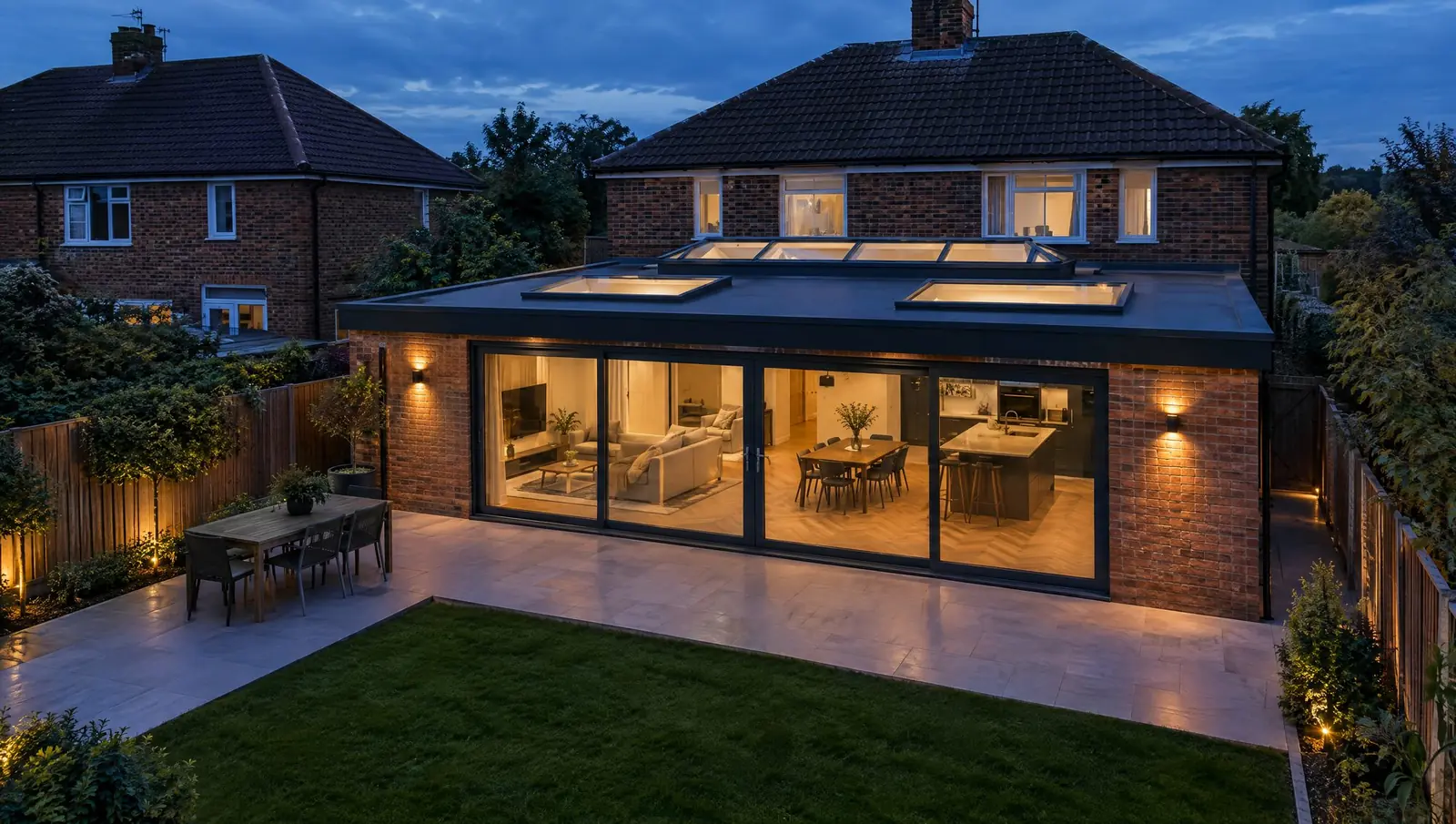
In most cases a rooflight on a house does not need planning permission, provided it projects only a little above the roof and stays below the ridge. The limits differ by nation. Householder rights do not cover flats, listed buildings always need listed building consent, and in Wales, Scotland and Northern Ireland a rooflight in a conservation area needs planning permission.
What are the rules in England?
In England a rooflight on a house is usually permitted development under Class C if it projects no more than 150 mm beyond the roof slope and sits no higher than the ridge. A rooflight on a side-facing slope must be obscure-glazed, and fixed shut unless the opening part is more than 1.7 m above the floor. Listed buildings need listed building consent, flats have no householder permitted development rights, and an Article 4 direction can remove the rights in some conservation areas.
What are the rules in Wales?
Welsh householder permitted development (Class C) allows rooflights that project no more than 15 cm and sit no higher than the existing roof — but not in conservation areas, National Parks, AONBs or World Heritage Sites. A side-facing rooflight within 10.5 m of the boundary must be obscure-glazed, and non-opening unless the opening part is more than 1.7 m above the floor. Listed buildings need listed building consent from the council, and flats have no householder permitted development rights.
What are the rules in Scotland?
Scottish householder permitted development (Class 2B, other external alterations) can cover a rooflight that projects no more than 1 metre from the roof, but the right does not apply in conservation areas. Listed buildings need listed building consent where the work affects their character. Flats and tenements are outside householder permitted development, so check with the planning authority first.
What are the rules in Northern Ireland?
In Northern Ireland, roof alterations come under Class B of the 2015 order: a rooflight facing a road must not project more than 15 cm and must sit at least 0.5 m from the ridge, eaves, verge and party wall. A side-facing window within 15 m of a neighbouring boundary must be obscure-glazed, and non-opening unless the opening part is more than 1.7 m above the floor. Listed buildings also need listed building consent from the council.
What about listed buildings and conservation areas?
Any work that affects the character of a listed building needs listed building consent, whatever its size. Conservation areas are handled differently in each nation, and councils can remove permitted development rights with an Article 4 direction. Ask the council before you order — a slim conservation-style rooflight fitted low in the roof is the type council conservation guidance most often describes, though nobody can guarantee an outcome.
Do flats have permitted development rights?
No. Householder permitted development applies to houses. Flats, maisonettes and many converted buildings need planning permission for external changes, and leaseholders usually need the freeholder's consent too.
How can I be certain?
Apply to the council for a Lawful Development Certificate (England and Wales) or the local equivalent. It is optional, but it gives you written confirmation that the work is lawful — useful when you sell the house.
This guide gives general information, not legal or structural advice. Rules change and every property is different — check with your council or building control for your address. We review our guides regularly; the date above shows the last review.
Sources
- Approved Document L, Volume 1 (2021 incorporating 2023 amendments)
- The Future Homes and Buildings Standards: Building Circular 01/2026
- GPDO 2015, Schedule 2 Part 1 Class C (England)
- Permitted development rights for householders: technical guidance
- Approved Document L Volume 1, Wales (2022 incorporating 2024 amendments)
- Town and Country Planning (GPDO) (Amendment) (Wales) Order 2013
- Building Standards Technical Handbook 2022: Domestic, section 6
- Circular 1/2024: householder permitted development rights (Scotland)
- Technical Booklet F1 (Northern Ireland), June 2022
- Planning (General Permitted Development) Order (NI) 2015, Schedule Part 1
- Building Regulations 2010, Schedule 3 (competent person self-certification)
- Approved Document F, Volume 1
- Approved Document O: overheating FAQs
- Approved Document K
- HSE: fragile roofs
- Regulatory Reform (Fire Safety) Order 2005, article 17
Find this useful? Add SkylightCompany.uk as a preferred source on Google.