Flat rooflights in March: what is involved?
Flat rooflights in March means fixed double or triple glazed rooflights for flat roofs and extensions. We cover the PE15 district and the rest of Cambridgeshire, with a survey before any price is fixed.
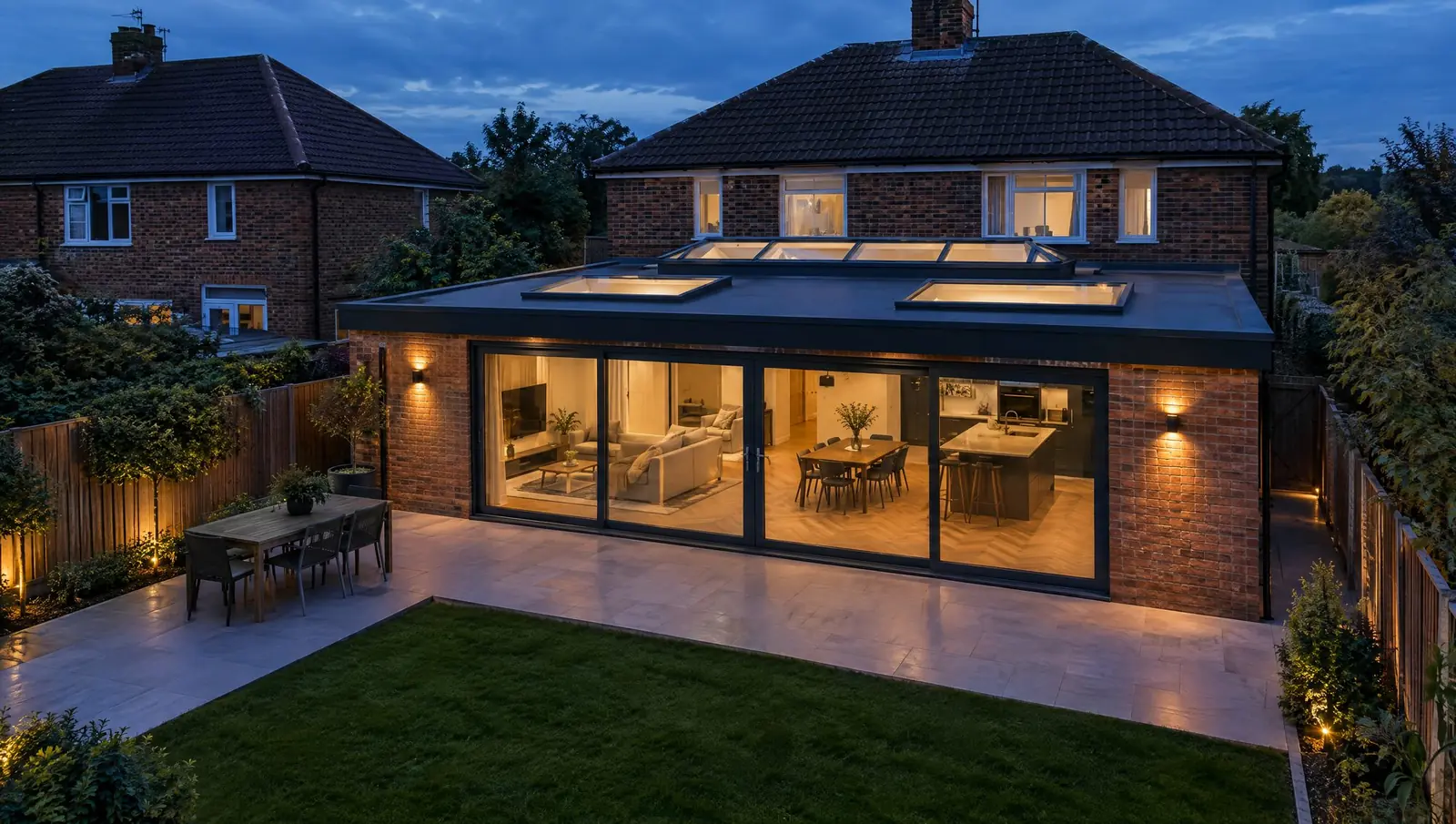
Many homes in the East have low-pitched roofs on later extensions, which are better served by flat rooflights than pitched roof windows. In March, as anywhere, flat rooflights are the usual choice for landings, bathrooms and rear extensions with flat roofs.
March is around 23 km from Peterborough, and we survey and fit throughout that part of Cambridgeshire, including the PE15 district.
Choices for your March project
- Double or triple glazing
- Rain sensor if paired with an opening unit
- Solar-control or self-cleaning outer pane
- Plastered or lined internal reveal
- Frame colours: anthracite, black, white or RAL
- Inner pane laminated for safety overhead
- Even, top-down daylight across the whole room
Before you order: points to check
- Needs a properly formed upstand — usually at least 150 mm above the finished roof surface (check the manufacturer's figure)
- Rooflights count toward glazing in an extension, which matters for Building Regulations energy and overheating rules
Do you need permission in March?
English householder permitted development (Class C) normally covers rooflights that stand no more than 0.15 m proud of the roof plane and stay below the highest part of the roof. A rooflight on a side-facing slope must be obscure-glazed, and fixed shut unless the opening part is more than 1.7 m above the floor.
Building Regulations Approved Document L sets a limiting U-value of 2.2 W/m²K for new or replacement rooflights in existing homes, measured in the horizontal plane; roof windows need 1.4 W/m²K or a Band B energy rating. In an extension, glazing including rooflights is normally limited to 25% of the new floor area plus any windows or doors the extension covers, unless a whole-house calculation shows otherwise.
See our building regulations guide for U-values, glazing limits and self-certification.
Flat rooflights prices in March
These are typical supply-and-fit ranges. For an address in March, scaffold, a hoist for heavy glass, or a new structural opening can move the figure, which is why we survey first.
| Option | Guide price inc VAT | Ex VAT |
|---|---|---|
| Large or triple glazed (1500 × 2500 mm and up) | £2,395 – £4,195 | £1,995 – £3,495 |
| Mid-size double glazed (1000 × 2000 mm) Typical | £1,675 – £2,395 | £1,395 – £1,995 |
| Small double glazed (up to 1000 × 1000 mm) | £1,195 – £1,795 | £995 – £1,495 |
From enquiry to finished job
- Send the details. Postcode, rough size and a photo of the roof and room.
- Free site visit. For new installs we survey free, measure and confirm the roof detail.
- Agree the quote. You approve the specification and price before anything is ordered.
- Fit and make good. We fit, seal, test and finish the reveal, then hand over the paperwork.
Neighbouring towns
More we do in March
Common questions
Do flat rooflights leak?
A well-fitted flat rooflight should not leak. Leaks almost always come from the upstand or membrane detailing, not the glass unit, which is why the upstand height and the way the roof covering is dressed up and under the frame matter more than the brand.
Double or triple glazing?
Double glazing suits most domestic jobs. Triple glazing improves thermal performance and cuts noise from rain, which is worth it over bedrooms or where the energy calculation is tight.
How long does it take?
Fitting into a prepared upstand usually takes a day. Forming a new opening in an existing roof, including making good inside, is often two to three days.
How do I book a survey in March?
Send your postcode and, if you can, a photo of the roof and the room. We offer a survey date when we reply.
Do you fit flat rooflights in March?
Yes. We survey and fit flat rooflights in March and across Cambridgeshire. Send your postcode and we will offer a survey date when we reply.